Larn
Larn
Reducing Cognitive Load in Research
Reducing Cognitive Load in Research
Services Provided
User Interface Design, UX Strategy.
Platform
Web Application
category
AI / Research / Education
YEar
2025
Building a Focused Research Tool
In April 2025, I worked on the beta version of Larn, an AI-powered research assistant for literature review, data collection, and insight generation.
I led the redesign with the CEO and engineering team to help researchers assess article relevance faster and reduce time spent filtering papers.
Building a Focused Research Tool
In April 2025, I worked on the beta version of Larn, an AI-powered research assistant for literature review, data collection, and insight generation.
I led the redesign with the CEO and engineering team to help researchers assess article relevance faster and reduce time spent filtering papers.

Understanding User Behavior
Because Larn was still in beta, we focused on academic researchers and students through surveys, interviews, and usage monitoring.
We grouped users by behavior and found that core users relied on chat to judge relevance. Irrelevant papers were usually dismissed within 3–4 prompts, while relevant ones led to deeper engagement.
Understanding User Behavior
Because Larn was still in beta, we focused on academic researchers and students through surveys, interviews, and usage monitoring.
We grouped users by behavior and found that core users relied on chat to judge relevance. Irrelevant papers were usually dismissed within 3–4 prompts, while relevant ones led to deeper engagement.


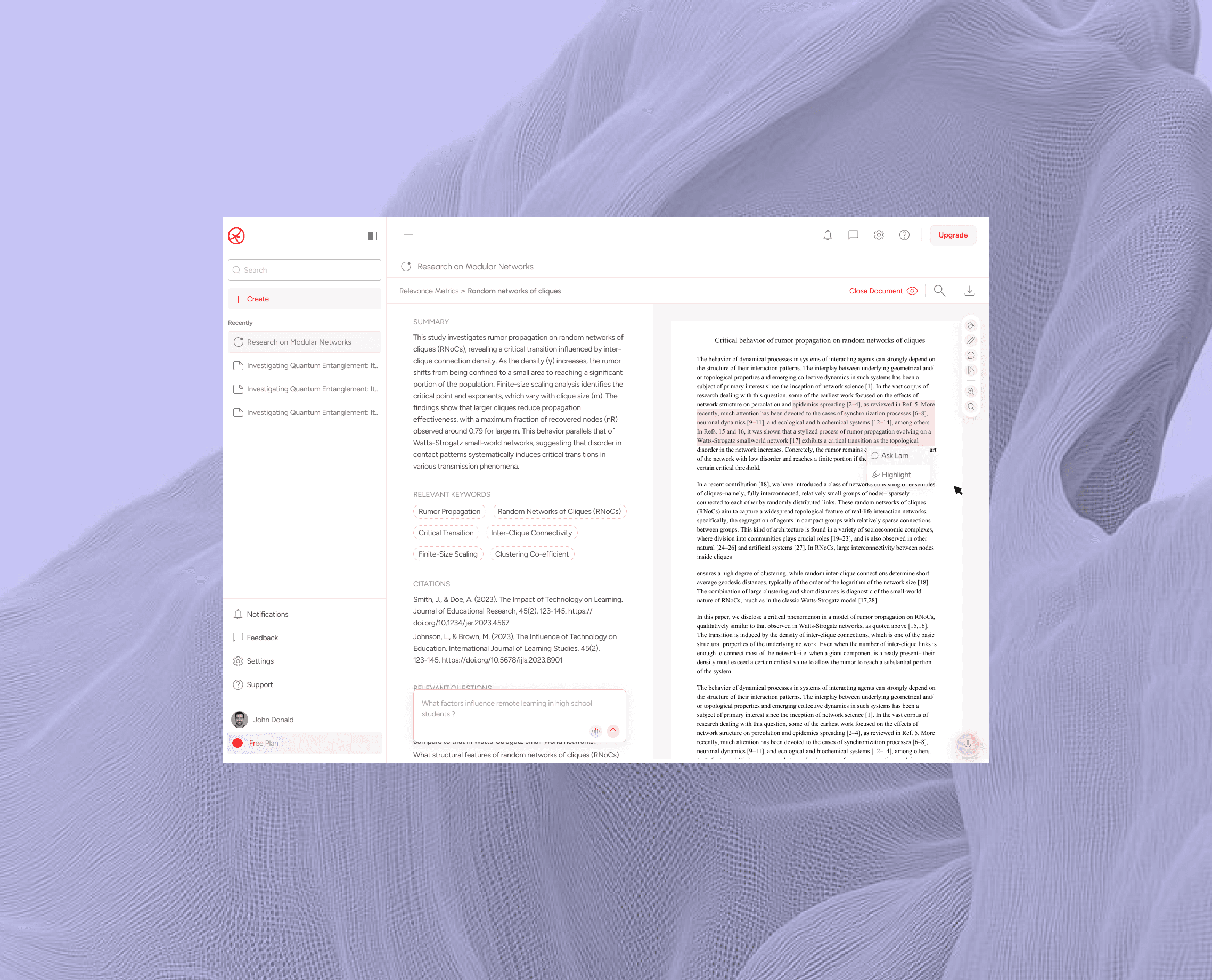
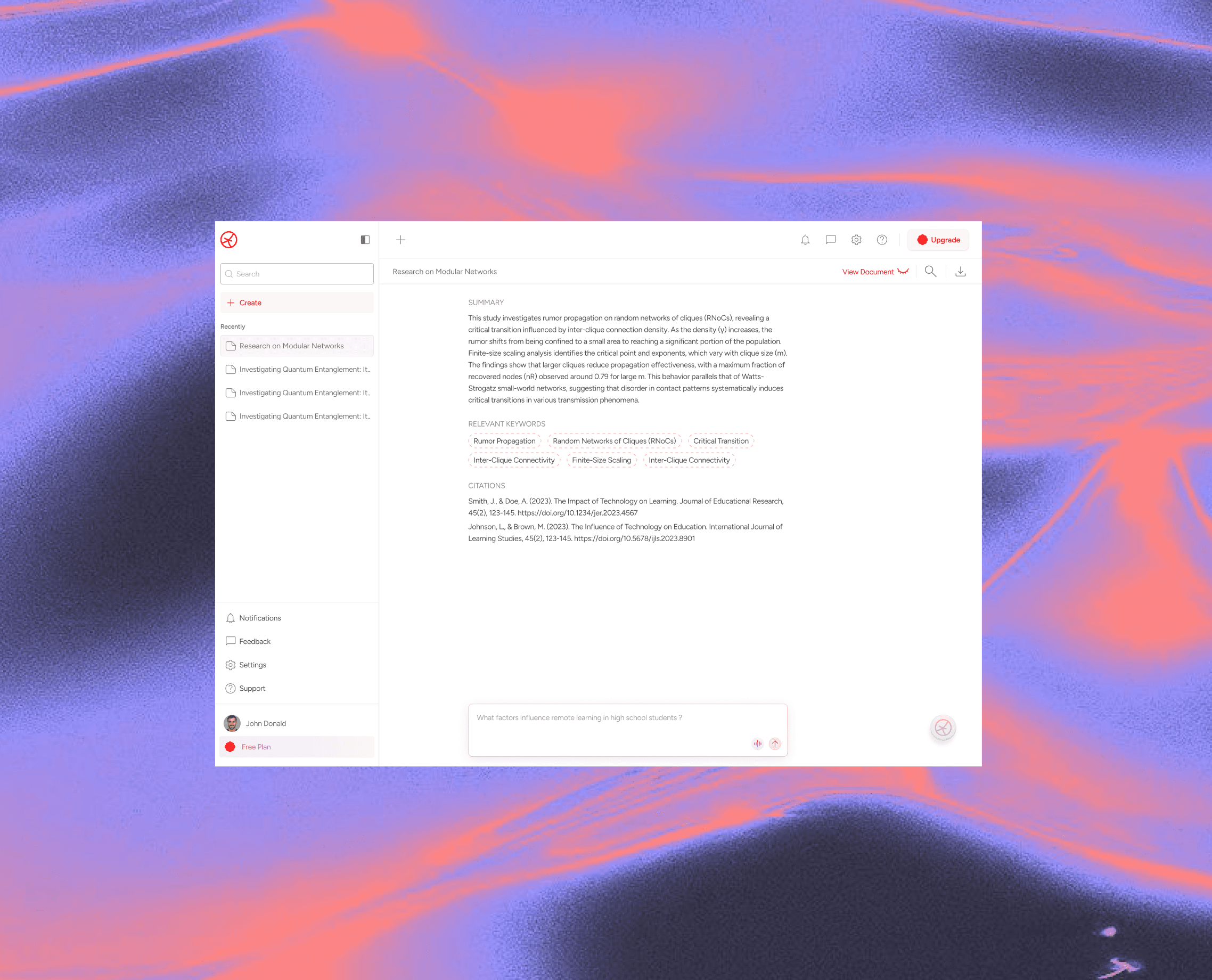


Designing for Faster Review
I developed a relevance framework around topic alignment, content depth, citation strength, and usefulness, then refined it with the team and users. This led to a guided campaign-style workflow for reviewing multiple documents.
Testing showed the new workflow was easier to follow and reduced average document relevance review time by approximately 500%.
Designing for Faster Review
I developed a relevance framework around topic alignment, content depth, citation strength, and usefulness, then refined it with the team and users. This led to a guided campaign-style workflow for reviewing multiple documents.
Testing showed the new workflow was easier to follow and reduced average document relevance review time by approximately 500%.